


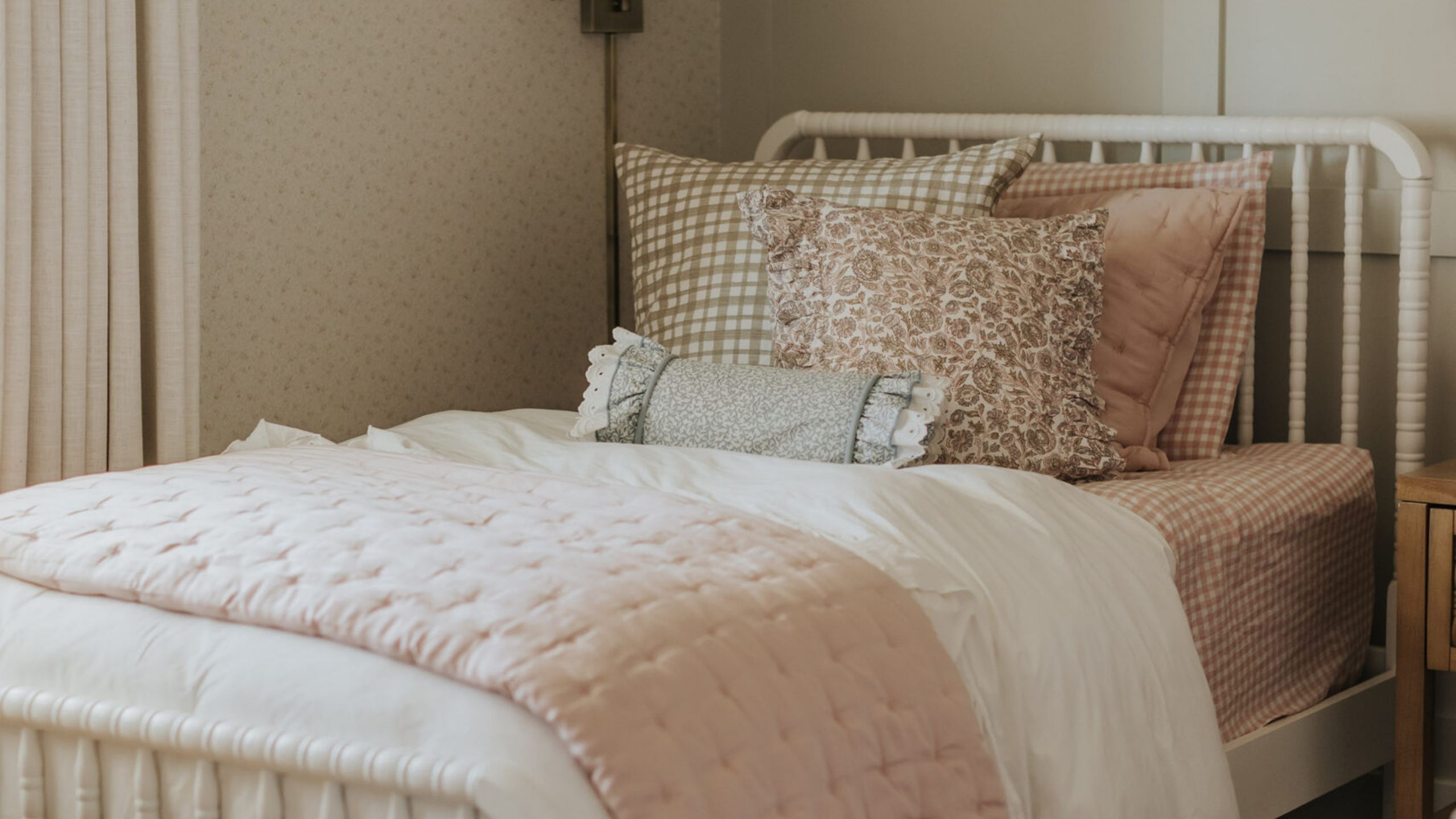
Pattern is one of the most misunderstood tools in interior design, and one of the most avoided. The instinct to play it safe, to keep everything solid, to introduce pattern only in the most cautious and limited way, is understandable. Pattern feels like a commitment. It feels like something that could go wrong.
And it can go wrong, but almost never in the way people fear. The rooms that feel overwhelming and chaotic from too much pattern are far rarer than the rooms that feel flat and unresolved from too little. Learning how to layer patterns in interior design is one of the most powerful skills you can develop as a homeowner, and once you understand the principles, it becomes instinctive.
The goal of layering pattern is not to be bold for the sake of boldness. It is to create depth, warmth, and the kind of visual interest that makes a room feel genuinely designed rather than simply furnished. Here is how we approach it.

The Most Important Rule: Vary the Scale
The most important principle in mixing patterns is scale variation, making sure the patterns you are working with operate at different sizes so they can coexist without competing. This single rule is what separates a layered room that feels rich from one that feels chaotic.
Think of pattern in three categories: large, medium, and small.
Large-Scale Patterns
A large-scale pattern commands attention. It is the pattern that reads from across the room, a dramatic floral wallpaper, a bold-scale print on a sofa, a large-repeat rug with a generous motif. Large-scale patterns set the tone for a room. They are the pattern that everything else is working around, and they are usually where a cottage interior design scheme begins.
Medium-Scale Patterns
A medium-scale pattern provides transition. It is the pattern that bridges the large and the small, a moderately scaled pillow print, a medium-repeat fabric on an accent chair, a curtain panel with a gentle geometric. Medium-scale patterns add depth without demanding the same attention as the large-scale anchor.
Small-Scale Patterns
A small-scale pattern adds texture. From a distance, it may read almost as a solid, a subtle stripe, a tight plaid, a small-repeat floral. Up close, it reveals itself as pattern. Small-scale patterns are what give a room its richness, the thing that makes the composition feel layered when you look closely.
When these three scales are present in a room together, they work. When two patterns of the same scale compete for the same visual attention, the room begins to feel busy.
Scale variation is the first rule of mixing patterns in interior design. Large, medium, and small patterns can coexist beautifully; two patterns of the same scale almost always compete.
How to Build a Cohesive Pattern Mix with Color
Pattern mixing works when the patterns share a color language, even loosely. They do not need to match. In fact, the most interesting rooms in cottage-style interior design rarely have patterns that match exactly. But they do share tones, undertones, and palette references that allow them to read as belonging together.
In practice, this means identifying the two or three colors that will anchor your palette before selecting any pattern. Those colors might be a deep forest green, a warm cream, and a faded terracotta. Every pattern you introduce into the room, the wallpaper, the rug, the throw pillows, the upholstery, should speak to at least one of those colors. The patterns themselves can be wildly different in motif and scale. As long as they share a palette, they will read as cohesive.
This is the principle that allows a bold floral wallpaper to live beside a plaid upholstered chair beside a Persian-influenced rug beside a striped throw pillow. Separately, they seem like chaos. Together, because they are all pulling from the same palette, they read as a considered, layered composition.
The role of solids in pattern mixing is important too. Solids are not the absence of pattern; they are pattern’s partner. Solid upholstery in one of the palette’s anchor colors gives the eye a place to rest between patterns. Solid linen curtains beside a patterned wallpaper give the pattern room to breathe. Every well-layered room has more solid than pattern; the pattern appears in deliberate moments, with solid providing the ground it reads against.
A shared color palette is what allows very different patterns to coexist in cottage home decor. The motifs can vary widely as long as the colors speak the same language.
How to Mix Florals, Stripes, Plaids, and Geometrics
There is a classic combination that appears again and again in cottage-style interior design, and for good reason, because it works: florals, stripes, and plaids in a shared palette.
Florals
Florals are the heart of cottage home decor. They introduce softness, color, and the sense of the organic into a room. They work in wallpaper, upholstery, pillows, curtains, and bedding, and they work particularly well as the large-scale anchor of a pattern composition.
Stripes
Stripes are the most versatile supporting pattern in cottage interior design. A ticking stripe, a wide awning stripe, or a narrow pinstripe provides visual order alongside the softness of a floral. It reads as structured without being rigid. Stripes work particularly well in upholstery, bedding, pillows, and wallpaper.
Plaids and Checks
Plaids and checks add a quality of lived-in comfort that is essential to the cottage aesthetic. A gingham pillow. A plaid throw blanket. A houndstooth accent chair. These patterns feel personal and warm; they reference clothing and textiles and the cozy domestic world of cottage living. They work best at small to medium scale, as an accent rather than an anchor.
Geometrics
Geometrics require more care in a cottage interior because their precision can read as contemporary. When used, we prefer geometrics with some irregularity, a hand-blocked print with slight variation, a tile-influenced pattern with softness in the color, a vintage-inspired diamond with a faded quality. The cottage version of a geometric is one that reads as collected rather than designed.
Florals, stripes, and plaids are the classic trio of cottage pattern mixing. Each brings a different quality, and together they create the layered warmth that defines the style.
Where to Introduce Pattern in a Room
Pattern can enter a room through many surfaces, and the best cottage-style rooms use several of them simultaneously.
Wallpaper
Wallpaper is the most impactful single pattern decision in any room. A wallpapered cottage room with otherwise simple furnishings can feel more layered and designed than an unpatterned room with complex furniture, because wallpaper wraps the architecture itself in pattern rather than introducing it only in the furnishings.
Upholstery
Upholstery is where pattern has the most physical presence. It covers the pieces you interact with most directly, and it contributes to the room’s visual weight in a way that a pillow cannot. A patterned sofa or a patterned accent chair anchors pattern into the bones of the room.
Rugs
Rugs introduce pattern at the floor level, which grounds the entire composition and adds visual interest beneath the furniture. A patterned rug and a patterned wallpaper in the same cottage room sound overwhelming, but when they share a palette and operate at different scales, they create the richest kind of layered depth.
Pillows, Curtains, and Bedding
Pillows are pattern’s most forgiving vehicle in home decor. They can be changed easily, layered generously, and mixed with relative freedom. We use pillows to introduce small-scale patterns that add texture and to test combinations before committing to upholstery or wallpaper. Curtains and bedding provide large expanses of fabric that can carry pattern at scale, or provide solid relief that lets the patterns elsewhere breathe.
Pattern can enter a room through wallpaper, upholstery, rugs, pillows, curtains, and bedding. The most layered cottage rooms use several of these surfaces simultaneously.
A Real Example: Pattern Layering in a Cottage Bedroom
In one of our recent cottage interior design projects, the primary bedroom combined a floral wallpaper in sage green and cream with a plaid accent chair, a vintage Persian rug in faded terracotta and blue, striped linen pillows, and solid cream bedding with a textured weave. Five pattern sources, all operating at different scales, all sharing a palette anchored by green, cream, and warm earth tones.
The result did not feel busy. It felt rich. It felt like a room that had been layered over time, where each element had been chosen because it contributed something specific to the whole. That is what successful pattern mixing looks like in cottage interior design, not chaos, but depth. Not competition, but conversation.
The goal of layering pattern in interior design is not boldness but depth. Warmth and visual richness that makes a room feel genuinely designed rather than simply furnished.
Frequently Asked Questions About Mixing Patterns
How many patterns can you mix in one room?
There is no strict limit, but we recommend having at least one solid for every two to three patterns to give the eye places to rest. The key is varying the scale and anchoring everything in a shared color palette.
Can you mix florals and stripes together?
Yes, and this is one of the most classic combinations in cottage interior design. The key is making sure they operate at different scales and share at least one color. A large-scale floral wallpaper pairs beautifully with a medium-scale ticking stripe on upholstery or bedding.
What is the easiest way to start mixing patterns?
Start with pillows. They are the lowest-commitment surface in a room and the easiest to experiment with. Choose one large-scale patterned pillow, one medium-scale, and one small-scale, all in the same color palette, and see how they work together. Once you are comfortable with that combination, extend the same principles to the rest of the room.
Does wallpaper count as a pattern?
Yes, and it is often the most powerful pattern in a cottage room. Treat wallpaper as your large-scale anchor and choose all other patterns in the room to work around it at smaller scales.
Ready to start layering pattern in your own home? Browse our portfolio for inspiration, or reach out about our in-person and virtual interior design services.
