


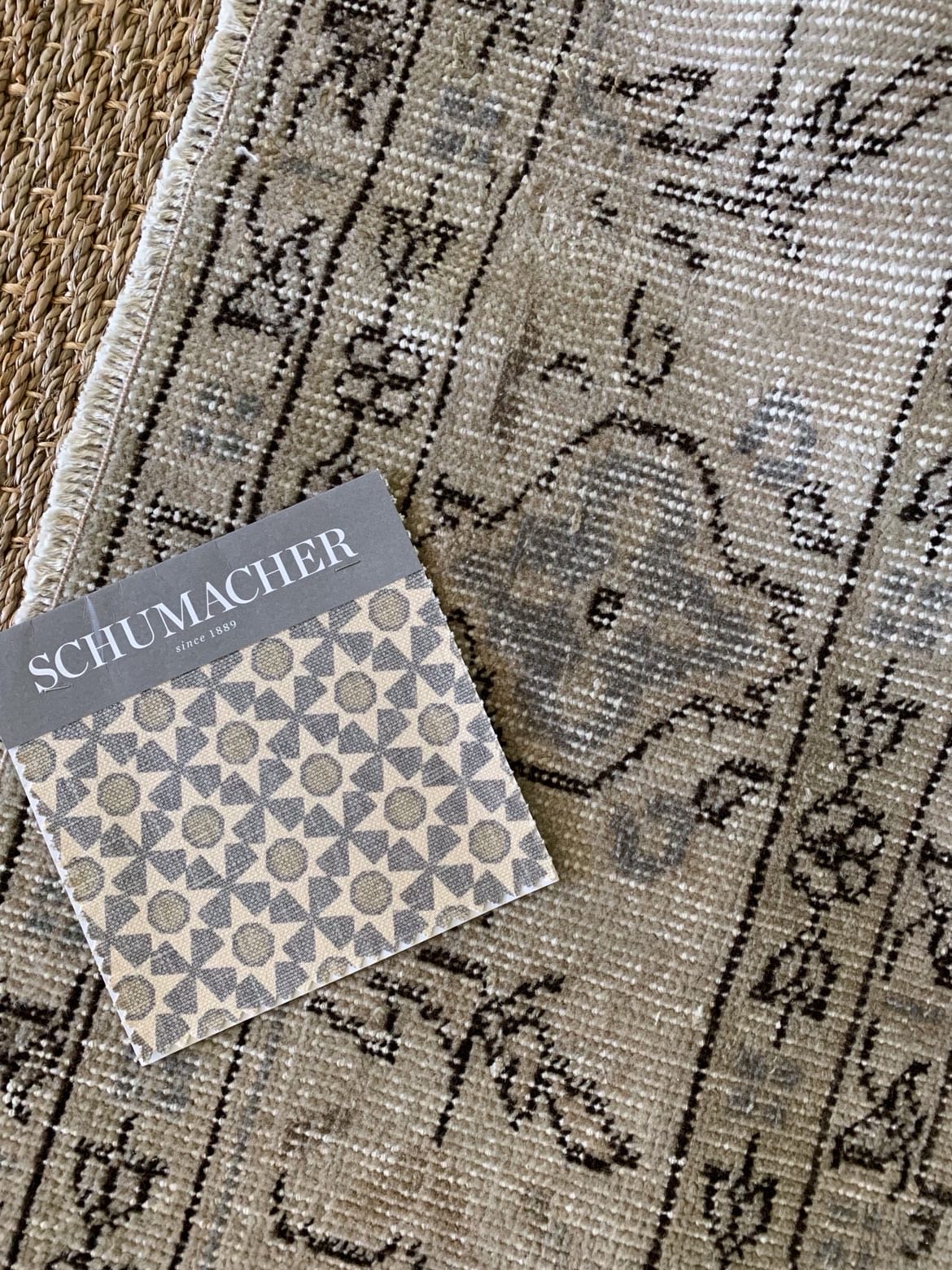
A rug is one of the most consequential decisions in any room, and one of the most frequently underestimated. It is not an accessory in cottage interior design. It is not the finishing touch that gets added after everything else is in place. It is the foundation of the room, the element that anchors the furniture, defines the space, introduces warmth underfoot, and sets the tone for every other decision that follows.
When a rug is right, you feel it without noticing it. The furniture looks placed rather than floating. The room has a quality of groundedness that makes you want to sit down and stay. When a rug is wrong, or simply absent, the room feels unsettled in a way that is difficult to diagnose but impossible to ignore.
We source rugs on nearly every cottage interior design project we work on, both in-person and virtually, and over time we have developed a clear sense of what we reach for and why. This is the guide.


How to Choose the Right Rug Material
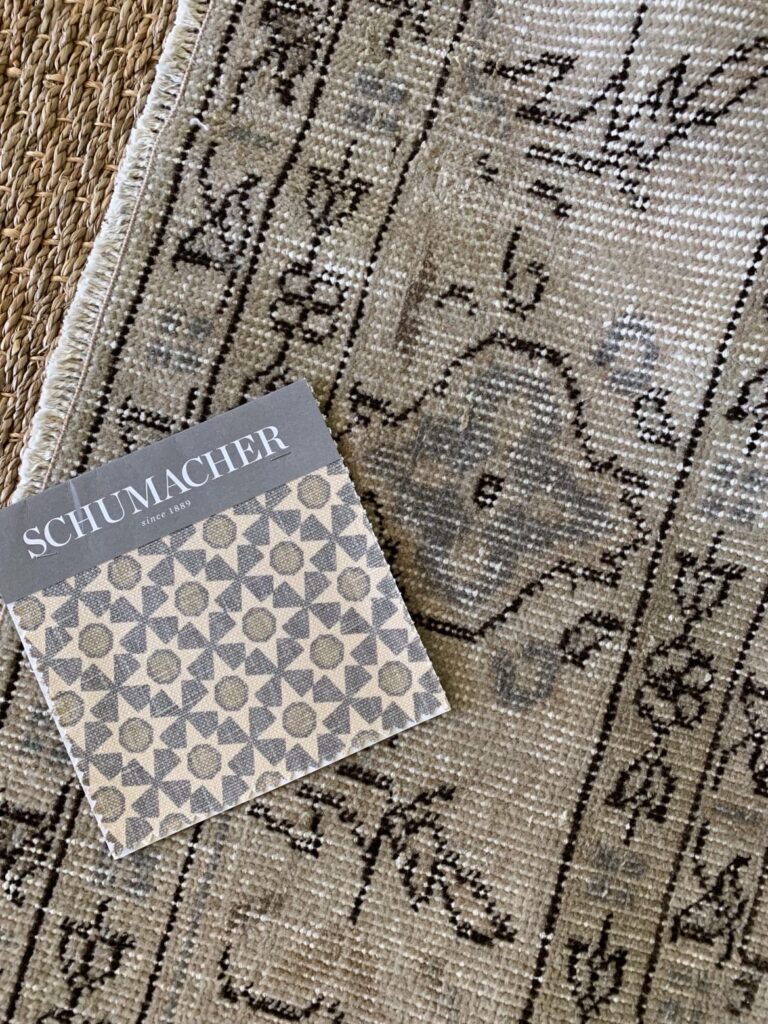
The material of a rug determines almost everything about how it will perform and how it will age. In a cottage interior, how a rug ages matters enormously. We are not looking for rugs that will look perfect for the first six months and then quietly deteriorate. We are looking for rugs that will develop character over time, that will soften with use rather than showing it as wear.
Wool Rugs
Wool is our most-reached-for rug material, and for good reason. Wool rugs are naturally resilient, naturally stain-resistant compared to synthetic alternatives, and naturally beautiful. They have a depth of color and a quality of texture that synthetic fibers simply do not replicate. A good wool area rug will last for decades. It will soften underfoot without losing its structure. It will age in the way that cottage interiors are meant to age: better with time.
Wool also has an acoustic quality that matters in a room. It absorbs sound and creates a sense of quiet that hard floors and synthetic materials cannot provide. In a cottage-style living room or bedroom, especially, this quality is immediately felt.
Vintage and Antique Rugs
Vintage and antique rugs are our other most-reached-for category for cottage interior design, and they deserve their own discussion. A vintage rug, whether a worn Persian, a faded Turkish kilim, or a muted Moroccan beni ourain, brings something into a room that a new rug cannot replicate: history. The colors have been softened by years of light and use. The patterns have a specificity that comes from being hand-knotted by someone who was following a tradition rather than a retail trend. Vintage rugs have earned their beauty, and that quality is immediately legible in a room.
We source vintage rugs frequently for our cottage interior design projects, both locally and through trusted online sources, and we often layer them. A vintage runner in a hallway, a faded Persian under a dining table, a smaller antique rug layered over a natural fiber in a bedroom. Each one adds depth and personality that no new rug can approximate.
Performance Rugs for High-Traffic Areas
Performance rugs have a place in high-traffic areas, mudrooms, children’s rooms, and heavily used kitchens, where the priorities shift from beauty to durability. The best performance rugs available today are significantly better than they were even five years ago. Brands like Loloi and Ruggable have developed options that hold up to real family life while still contributing something aesthetically to a cottage home decor scheme. We use them where practical, but we always prefer wool or vintage where the room allows.
When choosing a rug for a cottage interior, prioritize materials that improve with time. Wool and vintage rugs are our most-reached-for categories because they develop character rather than simply wearing out.
What to Look for in Rug Color and Pattern
In cottage-style interior design, the rug is often where pattern is introduced most boldly, and where the warmth of the palette is established most clearly.
We reach most often for rugs in muted, complex palettes, aged reds and blues, warm terracottas, soft sage greens, faded creams and ivories. Colors that look as though they have lived somewhere for a while. Colors that work with natural materials and warm wood tones rather than competing with them.
For pattern, we favor the layered and the irregular over the geometric and the precise. A Persian-influenced pattern with florals and vines. A distressed pattern where the original motif has softened into something more atmospheric. A vintage kilim with an irregular weave that gives the pattern life. These rugs contribute to the collected quality of a cottage interior; they look chosen rather than assigned.
We are generally cautious about very large-scale geometric patterns in cottage homes, not because geometry is wrong but because precision can work against warmth. A rug with a very crisp, symmetrical pattern can pull a room toward contemporary or minimal, which may not be the intention.
In cottage-style home decor, reach for rugs with muted, complex palettes and patterns that feel layered and lived-in rather than crisp and contemporary.
How to Choose the Right Rug Size for Every Room
Rug size is where most homeowners make their most expensive mistake: choosing a rug that is too small for the space it needs to anchor. Knowing how to pick the right rug size is one of the most impactful things you can learn about interior design.
An undersized rug does something visually damaging that is felt immediately, even when it cannot be named. It makes the furniture look as though it is floating. It makes the room feel smaller rather than larger. And it reads as an afterthought rather than a considered design decision.
Living Room Rug Size
In a living room, the rug should sit under at least the front legs of all main seating pieces, ideally under all legs for a fully grounded composition. If the sofa and chairs are hovering above the rug rather than connected to it, the rug is too small.
Dining Room Rug Size
In a dining room, the rug should extend far enough beyond the table that dining chairs remain fully on the rug even when pulled out. A good starting point is to add 24 inches to the table dimensions in every direction. A rug where chairs scrape off the edge every time someone sits down is not doing its job.
Bedroom Rug Size
In a bedroom, the rug should extend generously on both sides of the bed and at the foot, enough that your feet land on softness when you rise in the morning. A rug that only peeks out from under the bed frame is barely present in the room.
The rule of thumb we give every client: when you think you have found the right size, go one size up. The larger rug will almost always look better. The most common regret we hear from clients, both in-person and virtual, is that the rug was chosen too small.
When in doubt on rug size, always go larger. The most common client regret is always the rug that was chosen too small.
Our Favorite Rugs for Cottage-Style Homes
The rugs we reach for most consistently across our cottage interior design projects are linked through our LTK shop. You will find wool options in aged palettes, vintage-inspired Persian and Turkish patterns, layerable natural fibers, and performance options for high-traffic spaces, all organized by room and style with notes on sizing and layering.
Browse our LTK for the rugs we reach for again and again in cottage interior design, organized by room, material, and style.
Frequently Asked Questions About Choosing Rugs
What is the best type of rug for a cottage-style living room?
Wool or vintage rugs in muted, complex palettes work best in a cottage-style living room. Look for Persian-influenced patterns, distressed motifs, or layered vintage designs. Avoid overly crisp geometric patterns that read as contemporary.
How do I know what size rug to buy?
In a living room, all front legs of main seating should sit on the rug. In a dining room, add 24 inches beyond the table in every direction. In a bedroom, the rug should extend generously past both sides and the foot of the bed. When in doubt, go one size larger than you think you need.
Can I layer rugs in a cottage home?
Yes, and we highly recommend it. Layering a smaller vintage or antique rug over a natural fiber base is one of the easiest ways to add depth, pattern, and personality to a cottage interior. It also gives you flexibility to change out the top layer as your style evolves.
Where can I find vintage rugs for my home?
We source vintage rugs through a combination of local antique markets, estate sales, and trusted online platforms. Our LTK shop includes vintage-inspired options that give a similar effect at a range of price points.
Ready to find the right rug for your cottage home? Browse our LTK shop for our most-recommended styles, or reach out about our virtual and in-person interior design services.
